Front page article on the New York Times:
Outside Cleveland, Snapshots of Poverty’s Surge in the Suburbs
Sabrina Tavernise (NY Times)
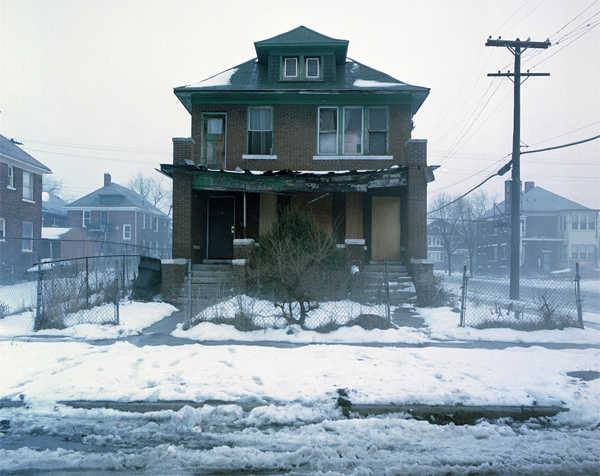
PARMA HEIGHTS, Ohio — The poor population in America’s suburbs — long a symbol of a stable and prosperous American middle class — rose by more than half after 2000, forcing suburban communities across the country to re-evaluate their identities and how they serve their populations.
The increase in the suburbs was 53 percent, compared with 26 percent in cities. The recession accelerated the pace: two-thirds of the new suburban poor were added from 2007 to 2010.
“The growth has been stunning,” said Elizabeth Kneebone, a senior researcher at the Brookings Institution, who conducted the analysis of census data. “For the first time, more than half of the metropolitan poor live in suburban areas.”
As a result, suburban municipalities — once concerned with policing, putting out fires and repairing roads — are confronting a new set of issues, namely how to help poor residents without the array of social programs that cities have, and how to get those residents to services without public transportation. Many suburbs are facing these challenges with the tightest budgets in years.
“The whole political class is just getting the memo that Ozzie and Harriet don’t live here anymore,” said Edward Hill, dean of the Levin College of Urban Affairs at Cleveland State University.
Our crisis has been misrepresented from the beginning. All of suburbia is an automobile habitat, designed and constructed for the benefit of the car- and energy industries. Governments at all levels; the real estate, insurance and finance industries hopped in for the ride. The idea promoted was that automobile waste would continue forever!
Michael Lynch or Dan Yergin and other cornucopians have PROMISED there would be new technologies and discoveries of crude oil to power our endless and heedless waste for all eternity.
The only thing necessary to bring about this blessed state of affairs would be higher energy prices. Higher prices would bring more commodities to the marketplace as they would make innovation affordable, empowering entrepreneurs leveraged by a free market.
Fuel prices since 1998 have increased by a factor of ten, but something has gone wrong with the ‘innovation plan’. None of the poor people in this country can afford fuel, afford a car or afford to pay for their house: they’re broke! This is the unspoken consequence of high prices, an outcome that has eluded the ‘intellectuals’ who manage the world’s economy. The suburban ‘non-towns’ cannot afford to provide services. The banks cannot afford loans and the borrowers cannot afford to repay them. Entire countries — which have no native energy supplies — have bankrupted themselves by copying ‘Leave it to Beaver’ — Greece, Portugal, Spain, France … China.
The people are becoming so poor they cannot afford to eat, these same people certainly cannot afford to support higher cost crude oil extraction in the arctic or in the deep Gulf of Mexico. Now what? The banks claim they can lend the necessary funds but people cannot repay the current mind-boggling amount of debt. Are we to double down? How do we do that? Who can be robbed, nobody has any money!
From the very beginning of this crisis, the establishment — including the New York Times — has been misrepresenting its nature. We are having an energy crisis not a finance crisis. Our entire economy is built around wasting capital for transient gains that flow upward to a handful of oligarchs. Yet no article dares mention anything about oil except to reassure us that we have plenty.
While the US rots from the inside, the Europeans are disintegrating. It’s tragic, really. The western world has driven the freeway right up its own anus. Once at the destination, there is surprisingly little maneuvering room! Contemplating consequences is unpleasant so the Euroleaders attempt to fool themselves convincingly one last time. Sixty-five years ago the Europeans swore to a new beginning, a break from centuries of militarism and warfare. The noble idea got lost in the a floating fantasy of pointless mobility and fleeting mercantile advantages.
“Europe Faces New Hurdles in Crisis Over Debt
On the eve of a European Union summit meeting, crucial financial measures were still unresolved.
The most crucial of the crucial central issue is that Europe is flat broke! It has nothing of any value left! It spent everything on gas!
Zero is quite an unresolvable crucial financial measure!
This entire mess has been a charade of folks who should know better. The leaders are like spoiled little children, waiting desperately for Adam Smith’s ‘Invisible Hand’ to come down the chimney like Santa Clause with bags full of euros to hand out. One would think that two years in, the ‘leadership’ would realize the giant hand isn’t going to come down anything.
Europe’s problem is its lack of petroleum resources: it must trade bits of colored paper to Middle Eastern despots so that Europeans might ape Americans and drive aimlessly in circles between ugly buildings, one more monstrous than the next. This paper trade has been a multi-decade dead loss to Europe and now the continent is bankrupt. This couldn’t happen to a nicer bunch of people.
The senseless ‘leadership’ has a choice:
– It can implement stringent energy conservation measures and cut fuel use by half to start with and by further large percentages during the next few years to come. OR:
– It can go bankrupt. Period. There are no other choices.
Eurostates will be left with the fuel they can pump from their own soils. Right now, Norway and Denmark have petroleum reserves … that’s it!
The bottom line is the cars go or the cars go, one way or the other they are gone. Over. Fin. Completo. Sayonara. Adios. Auf wiedersehen. Good riddance!
When the cars go, suburbia dies. There is no way for the public to create affordable mass transit without the mass. The world’s suburbs, from California to Beijing, from Spain to Brazil are obsolete, they cost more to run than they can return by their use.
The nations were brought to conflict by pointless institutional rigidities that no individual government felt able to escape. The outcome was a sense of inevitability that is mirrored today: that there is no escape from bankruptcy as the institutional tools have been placed purposely out of reach.
There is no reason why the Europeans should reject common bonds and a fiscal authority. What the leadership fears is loss of policy autonomy that is proven over the past two years to be poisonous! The German establishment is concerned about being stuck with the costs of European deadbeats that it sees no responsibility for creating. These deadbeats are nothing but proxies for German businesses and banks. German sovereignty is self-defeating, it encourages the very disastrous loss of financial autonomy it desperately seeks to avoid!
As has been the case throughout its history, Europe is at odds with itself and its own interests, the Leviathan’s war of all against all.
The governments in Europe in the summer of 1914 didn’t want to stop war. They all wanted war, they all thought they would win before Christmas, because they had better technology (they thought) than the other countries.
Each European country believed it had the answer or rather, its own particular answer. Britain had its dreadnoughts, France had its ‘elan’, Germany had its artillery and the Russians, their rapid mobilization. It turned out that all the countries had the exact same advantages but nobody was able to figure this out for themselves in advance.
WWI had very little strategy involved, it was the first machine v. human war, and the clear winner was the machine. All the pre-machine institutions were thrown over as failures: the monarchies, the bourgeois sensibilities and ‘high civilization’, the empires, the church. The consequences we are all living with now, mindless supremacy of the mindless machines.
Sir Edward Grey remarked before the hostilities began: “”The lights are going out all over Europe: we shall not see them lit again in our lifetime.” He was wrong, the lights have never been lit we are monsters groping along in the darkness …