
Unknown photographer ‘Motor Vessel ‘Euro-Bank’ taking on water*
There have been worries of the apocalypse when Greece finally exits the euro. Now that exit is a certainty the ‘system’ is having second thoughts. Everything might be fine, after all.
Here is a view from Greece by way of New York City (Bruce Krasting):
The Greek Diaspora is in full swing. People are leaving the country, old and young alike. They are going to Europe, where the prospects of jobs stink, but not as badly as in Greece. They are also fleeing to America (family members in the US have been helping out), Australia (where some are welcome) and South America.The talk is that the Greeks are becoming the new Palestinians. They leave their homes, as there is no future there, but all the time they wish they never left.
As the shops close and the people leave, the economy shrinks. My Greek friend is convinced that government revenues are collapsing as a result. Whatever estimates the Troika were looking at six-months ago are pure fantasy today. The country is imploding.
People are feeling hopeless, and the situation is getting worse. In this fellow’s opinion, there is not a chance in hell that Greece will avoid a default. Two years ago there was a general belief that Greece could manage through a crisis, and avoid defaulting and sustain the link to the Euro. That is no longer the case.
Some folks in Greece are heading back to the farm. The rest go to where they can still drive a car, presumably.
Driving cars in Europe has been the problem all along but it would be hard to find anyone who believes that driving a car is anything other than an economic ‘solution’ along with new freeways, new suburban ‘villas’, new vacation ‘homes’, new bunker-like ‘hotels’, new concrete office towers in the place of medieval cities, new high-speed rail, new military hardware, new airports and the rest of the twentieth-century waste icons.
The Greeks will find employment a mirage in other parts of Europe, plus they will be blamed for everything. Not only are the Greeks to be the ‘New Palestinians’ they will be the ‘Niewe Jews’ at the same time.
If there were any Jews left in Europe they would be blamed for everything now. Better to blame automobile manufacturers who are really at fault. They succeed at others’ expense.
Meanwhile, policy is conflicted.
If Greece sinks with an explosion and fire no one else will dare risk exiting the euro. This is familiar ground: “we had to destroy this village to save it”. The euro must be destroyed in order to save it. People will know that the euro has been saved when it vanishes.
If Greece sinks with a ripple rather than a fireball other European nations will take note. At some future time they will pull the plugs on their own debts leaving the so-called ‘strong’ nations holding the Euro-debt bag. If Greece herself does not explode, the rest of the fleet will.
Greece sinking with an explosion will be harsh for lenders. Nothing is static, time waits for no one: depositors race for the lifeboats even as the good ship ‘Euro-banking’ pulls away from the dock. Fleeing deposits require the banks to jettison assets at any price to satisfy depositor demands for funds.
Sacre Bleu! Bank runs are the cause of the ship’s sinking: The ocean leaks out of the ship into the water!
In Europe and elsewhere, assets of rapidly diminishing worth vastly exceed capital. Should these assets be priced to the market the banks are instantly bankrupt. OUCH!
Since the euro is on death’s door, why doesn’t the EU simply forgive Greece’s debts and ‘help’ (restructure) the lenders, bailing out depositors? The answer is that all of the Eurozone debts would have to be forgiven. This would put a ‘dent’ on Eurozone wealth as ‘wealth = debt’ (with one exception) As mentioned previously, industrialization does not pay for itself. It must borrow …
If the debts are forgiven on Monday, new debts would have to be taken on Tuesday in the amount of the old debt so that the economy could function. There simply is no escaping the debts.
The one exception: Steve’s First Law of Economics: the costs of managing a surplus increase along with the surplus until at some point they exceed it. With the Eurozone’s gigantic, pyramided debts, there is far more debt ‘costs’ than there is wealth ‘surplus’. After wiping out all of Europe’s wealth, there would still be massive obligations (costs) remaining on Europe’s books. What happens to them?
This is the precious future reaching back into our present to bite us on the ass …
Always watch what managers do rather than listening to the lies. Nobody dares to restructure because it is impossible. Assets are worthless uniformly across the entire world’s balance sheets, these weigh on liabilities. Writing down non-performing assets annihilates liabilities. Restructuring means shareholders, bond holders and depositors will all be ruined.
The reason all will be ruined is because the authorities waited too long to take action. If the EU had restructured banks and taken losses in 2008 when the crisis began … Europe would now be facing something other than a debt crisis.
The debt crisis is simply the most convenient problem. The next-most convenient is the fuel shortages. Let’s see how the Europeans deal with those!
The latest effort to save the day is for the European Central Bank to rush in and bail the banks with trillions of counterfeit euros. This is bailing with borrowed funds. Instead of shrinking the overall debt load expands massively in a exponential phase change (hockey stick).
First comes a few piddling billions, then a half-trillion, then ten trillion … then a hundred trillion at which point the ECB has to get serious: a billion-gazillion-trillion euros! That’s a big loan! What is supposed to be collateral? Who gets to pay that loan back, the Greeks?
This is why the coin shop on the corner has run out of gold coins. The Europeans didn’t sign on to this future, they were supposed to have robot kitchens, not robot central bankers mindlessly lending quadrillions of euros, rendering them worthless in the effort to make the joke banks worth slightly more.
You can’t make this stuff up. No matter how absurd you think you are you are not nearly absurd enough!
Buying time costs more than it returns: meanwhile, someone has to pay for the time. Because Germans are slightly less broke than the rest of the Europeans, funds to bail out the banks are surreptitiously booked against them. ECB ‘easing’ is a ticking time bomb fastened onto the Eurozone. Everything and nothing depends on Germany’s forbearance (ignorance).
Given the choice, Germany will refuse to finance the mess (it helped create. Think of all those German SUVs in Greece).
If ‘Replacement assets’ are issued by the central bank in sufficient quantities to alter events, these new assets will be worth no more than what they are exchanged for. If you trade ten euros for a bag filled with dog feces, what is ten euros worth? What about exchanging ten trillion euros for a cruise ship cargo of dog feces?
A Greek default is the ‘No Bank Left Behind (In One Piece)’ process. Europe will have to rebuild its banking system from the ground up with new capital. HEY! There is no such thing as collective European capital! This is the putative reason for the crisis in the first place!
Here is the euro compared to the dollar:
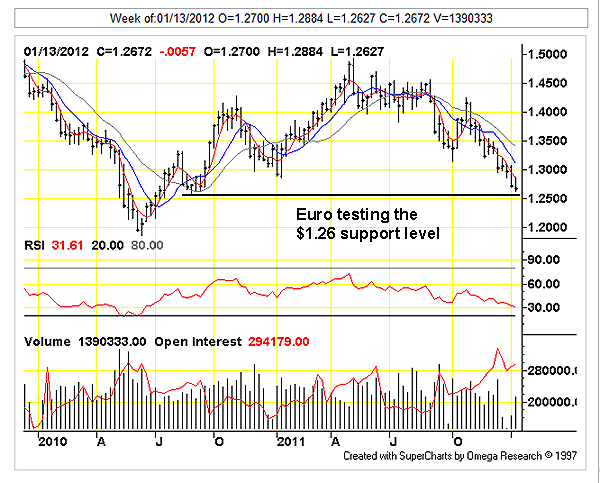
Figure 1: Note there is no zero on this chart (from TFC Chartz, click for big).
The euro devaluation is taking place under everyone’s noses. A 50% euro devaluation would theoretically be the same as a 50% Greek devaluation in drachmas, except Greece owes the rest of the world, not Greeks. The IMF, ECB and EU are just bill collectors for Wall Street and City of London lenders/fat cats.
Devaluation won’t render Greece or the rest of Europe’s deadbeat’s club solvent.
Commodities have advanced 15 percent since Oct. 4, rebounding from a ten-month low. Copper, oil and gold may rally this year as economic growth in China and the U.S. offsets the impact of a European recession, Goldman Sachs Group Inc. said in a report last week.“More and more market players believe that China will implement further monetary easing measures,” Eugen Weinberg, head of commodities research at Commerzbank AG in Frankfurt, wrote in a report today. “This is giving considerable buoyancy to metal prices.”
Speculators are like dogs, they hear the bell ring and start drooling. Ever since the days of Greenspan, economic troubles guarantee shots of Viagra for the speculators. Chris Wood by way of Zero Hedge:
By creating a massive incentive for European banks to buy their government’s debt issuance up to three years maturity, the new ECB leader Mario Draghi is clearly seeking to get control over the direction of Eurozone government bond yields. The dramatic decline in Eurozone bond yields up to three years suggests he is getting some traction (see Figure 1).It is also the case that absolute-return investors may be tempted to “front run” coming bond auctions if they think the ECB policy is working. On this point, market talk is focusing on an even bigger amount to be borrowed at the next 3-year longer-term refinancing operation (LTRO) due on 29 February. GREED & fear has heard guesstimates of up to €1tn!
Bank of England injects further £75bn into economy.6 October 2011
The governor of the Bank of England, Mervyn King, tells the BBC that quantitative easing will have an effect.
The Bank of England has said it will inject a further £75bn into the economy through quantitative easing (QE).
The Bank has already pumped £200bn into the economy by buying assets such as government bonds, in an attempt to boost lending by commercial banks.
But this is the first time it has added to its QE programme since 2009. There have been recent calls for it to step in again to aid the fragile recovery.
The Bank also held interest rates at the record low of 0.5%
International Monetary Fund working paper:
the recovery began to slow during the autumn of 2010, prompting the Bank of Japan to embark on a new “comprehensive monetary easing” (CME) policy in October 2010. The CME comprised of three elements: (i) a “virtually zero interest rate” policy, (ii) a commitment to maintain zero interest rates until the BoJ judges that price stability is in sight on the basis of its “medium- to long-term understanding of price stability and (iii) a new asset purchase program, covering corporate bonds, commercial paper, exchange-traded funds (ETFs), and real estate investment trusts (REITs), in addition to government securities, in an effort to reduce term and risk premia.Following the earthquake, the BoJ doubled the size of the asset purchase program to ¥10 trillion. As a result, the BoJ’s balance sheet, which was already large at about 20 percent of GDP, expanded to about 30 percent of GDP.
Notice how the banks start with accepting government securities as collateral then over time accept feces as collateral: ETFs, REITs, commercial paper, etc.
If everyone else in the world is easing, the Fed doesn’t have to do anything.
The Fed is constrained by fuel prices, now at $110 per barrel without easing. Throwing more cheap loans at debt problems would push fuel prices to the recession level, triggering the event the Fed is desperate to prevent. If others ease, however, The price of fuel in their currencies increases. Here is almost-conservation by other means. More fuel will be made available for the US to waste, car sales will leap like stallions.
Dollars would also become become hot property. The Fed can be sanctimonious while allowing the other major nations’ currencies to depreciate around the dollar.
Analysts insist the Fed must weaken the dollar to support asset prices in the US. Why would the Fed do that? Better to let Wall Street scavengers buy Europe for pocket change.
Once the euro’s decent shows up in the European fuel price the Germans will cry ‘inflation’ and have the excuse they need to exit the Eurozone.
Speculators hold to the fantasy that a German exit will result in a D-mark worth more than the euro. Germany’s exit from the eurozone will also look exactly like a default.
If Greece defaults into drachmas, all the other nations will default into their own versions of drachmas, to settle debts in the new currencies which will have minuscule exchange rate differences between them. The new national currencies will basically be the new euro. There really isn’t much difference between countries, between ‘north’ and ‘south’. All are equally bankrupt, all have massive debts, all are wedded to cars-first transport and fuel waste.
The dollar swap lines allow US investors to buy hammered down EU assets at fire sale prices (in dollars). The more desperate the EU establishments become, the more dollars they take on, the more European collateral is reduced in worth, the more falls into the hands of US lenders. Right now, Europe is bag lunch for Wall Street scavengers. The large cannibalizes the not-quite so large on account of being slightly more credit-worthy. The theme of the last article, ‘Really Bad Ideas Running Amok’ is being played out in real time … for those with the wit to notice.
*Costa Concordia sinking off the coast of Italy, January, 2012