
Titan ‘La Bella – Woman in Blue Dress’ (1536) The unknown woman is suggested to have been Titian’s mistress. It is more likely she was simply the Venetian girl next door.
How much is that Titian in the window worth? If you have to ask, you cannot afford it: the post-war European economic concordat is unraveling and everyone is broke. Nobody can afford anything. The word of the moment, the word on every analyst’s lips besides re-hypothecation and collateral is debt. It’s ‘all debt, all the time’ from all the analysts. Ordinary hypothecation struggles to keep up: there is never a word about energy or resource imbalance or the defects in the industrial ‘process’ that requires taking on the staggeringly huge debts in the first place. The failure to consider energy throws the debt analysis off-center. Nothing exists in a vacuum including debt.
The question never asked is whether it is possible to industrialize beyond a certain, fairly primitive level without taking on debt. This is an easy question to answer: the ‘product’ of industrialization is a surplus, the debt is taken on the meet the increasing costs associated with these surpluses. The entire purpose of any economy is to push costs including the debt service and retirement onto a group separate from those holding the surpluses.
The Europeans are taking one side of an argument between the porn of liquidity and the religion of austerity. One side demands the establishment step in to provide a substitute for demand lost to the ongoing crisis. The other side insist on ‘old-time virtues’ of thrift. The Europeans have grasped the nettle of religion and austerity.
Austerity is inevitable and may be virtuous but the EU approach is founded on faulty analysis and doomed to failure, The outcome is squandered resources that would otherwise simplify any future transition away from the wasteful present.
Conventional austerity a comforting illusion, that moderns can maintain high levels of waste without the need for more debt. It suggests debt is an option, a bagatelle; that debts can be painlessly forsworn. The costs associated with managing modernity’s surpluses will be shifted away from broken reed of finance to some other entity ‘to be determined later’.
Debt is integral to consumption economies, ongoing increases in debt are necessary to the point where the increasing debt surpluses gains their own universes of attendant costs. There is no return on waste, returns have to come from somewhere. If not Santa Claus they must be borrowed. The issue then becomes the value of the collateral. The crisis is the lightning flash of understanding that illuminates the utter worthlessness of modernity’s ‘production’ and its defect as collateral.
Here is value versus non-value side by side. The Titian, the girl, the clothes, the Venice all represent past- and current value. Where is our version? What does modernity have to offer that can withstand the tests of time alongside the great masters of the past? You keep your gold as collateral: ours is the thin gruel of abstractions: “we’re Number One!” That has to be worth a trillion euros right there.
Production statistics is modern non-value, see if you can spot the credit:
2010 Automobile Production Statistics
| Country | Cars | Commercial vehicles | Total | % change |
|---|---|---|---|---|
| Argentina | 508,401 | 208,139 | 716,540 | 39.7% |
| Australia | 205,334 | 38,161 | 243,495 | 7.1% |
| Austria | 86,183 | 18,814 | 104,814 | 45.2% |
| Belgium | 528,996 | 26,306 | 338,290 | 3.3% |
| Brazil | 2,828,273 | 820,085 | 3,648,358 | 14.6% |
| Canada | 968,860 | 1,102,166 | 2,071,026 | 39.0% |
| China | 13,897,083 | 4,367,584 | 18,264,667 | 32.4% |
| Czech Rep. | 1,069,518 | 6,867 | 1,076,385 | 9.5% |
| Egypt | 92,249 | 32,090 | 69,060 | 0% |
| Finland | 6,385 | 280 | 6,500 | -39.2% |
| France | 1,924,171 | 305,250 | 2,227,742 | 8.9% |
| Germany | 5,552,409 | 353,576 | 5,905,985 | 13.4% |
| Hungary | 165,000 | 2,890 | 167,890 | 58.6% |
| India | 2,814,584 | 722,199 | 3,536,783 | 33.9% |
| Indonesia | 496,524 | 205,984 | 704,715 | 51.1% |
| Iran | 1,367,014 | 232,440 | 1,599,454 | 14.7% |
| Italy | 573,169 | 265,231 | 857,359 | -0.6% |
| Japan | 8,307,382 | 1,318,558 | 9,625,940 | 21.3% |
| Malaysia | 522,568 | 45,147 | 567,715 | 16.0% |
| Mexico | 1,390,163 | 954,961 | 2,345,124 | 50.2% |
| Netherlands | 48,025 | 46,081 | 94,106 | 22.6% |
| Poland | 785,000 | 84,376 | 869,376 | -1.1% |
| Portugal | 114,563 | 44,160 | 158,723 | 26.0% |
| Romania | 323,587 | 27,325 | 350,912 | 18.4% |
| Russia | 1,208,362 | 194,882 | 1,403,244 | 93.5% |
| Serbia | 17,384 | 649 | 6,470 | 79.0% |
| Slovakia | 556,941 | 0 | 556,941 | 20.7% |
| Slovenia | 201,039 | 10,301 | 205,711 | -0.7% |
| South Africa | 295,394 | 176,655 | 472,049 | 26.2% |
| South Korea | 3,866,206 | 405,735 | 4,271,941 | 21.6% |
| Spain | 1,913,513 | 474,387 | 2,387,900 | 10.0% |
| Sweden | 177,084 | 40,000 | 217,084 | 38.8% |
| Taiwan | 251,490 | 51,966 | 303,456 | 34.1% |
| Thailand | 554,387 | 1,090,126 | 1,644,513 | 64.6% |
| Turkey | 603,394 | 491,163 | 1,094,557 | 25.9% |
| Ukraine | 75,261 | 7,872 | 83,133 | 20.0% |
| UK | 1,270,444 | 123,019 | 1,393,463 | 27.8% |
| United States | 2,731,105 | 5,030,335 | 7,761,443 | 35.4% |
| Uzbekistan | 130,400 | 26,480 | 156,880 | 33.1% |
| Supplementary | 367,587 | 98,319 | 329,289 | 55.3% |
| Total | 58,478,810 | 19,378,895 | 77,857,705 | 26.0% |
China, Japan, the US and Germany are the world’s largest car producers according to the International Organization of Motor Vehicle Manufacturers.
Here is ‘production statistics’, where nothing exists other than that which can be marketed. Here is anti-value, grotesque and dumb (and destructive) at the same value level as a toxic waste dump. It is of a piece with Stalin’s satanic word game: “A single death is a tragedy, a million deaths is a (production) statistic:
Increasing auto sales are ‘good news’, right? The ‘good news’ hits the fan: The hate-filled mullahs in Iran cobbled together more cars than did France, almost as many as Italy and Poland together. Thailand produced not-quite three times as many light trucks as did auto-titan Germany, almost as many as Canada. Where have all those flowers gone? Paved under for the one-hundred-forty-million-odd parking spaces needed for these cars: one for where the car is, another for wherever the car is going …
Europe as a whole is the second place producer behind China. There were 16,925,651 autos produced in Europe against 18,264,667 from China. This tally includes Serbia and the UK excluding Russia, Turkey and the Ukraine. Adding Russia’s 1.4 million and Turkey’s 1 million makes Europa the world’s auto manufacturing center by a wide margin. Nearly twenty million iterations of ‘progress in a can’ is ten million more than world’s long-time auto champ Detroit.
Millions upon millions every single year: what is taking place right now under every economist- and policy maker’s nose is Europe morphing into ‘Detroit 2.0’ and largely for the same reasons. Automobile ‘production’ is singularly unproductive, automobiles don’t earn their keep. Every year, to the tune of trillions of dollars, euros, yen, whatever wasted on cars, fuel, cardboard and plastic ‘destinations’, the parking spaces and roads, the gigantic value-sucking scheme digs its own grave. The auto enterprise requires a gargantuan flow of new loans. Because ‘production’ cannot pay its way by use of the products, unlimited credit must be provided to all levels in order to maintain the ‘good times’ and ‘prosperity’ illusion while providing profits for the Bosses.
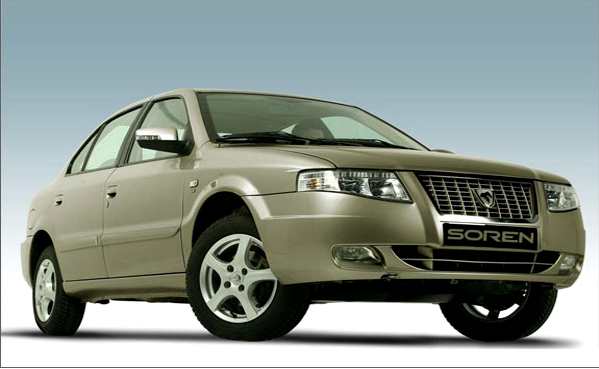
Tehran iron: Sixteen tons of non-remunerative ‘production statistics’ and whaddya get? Another day closer to the implosion of the Europeen credit racket.
The Europe governments have just signed their increasingly discontented populations to an austerity compact in order to support the states’ creaky credit empire. Bosses will deny it but the auto industry in Europe has just been sent to the executioner. The banks are now set to compete against the world’s greatest industrial enterprise. Without the credit, nobody will be able to afford the cars … or the rest of it.
The banks’ lenders are to be saved at the expense of everything else. Credit is going to flow — what remains of it — toward the banks rather than away from them.
The managers insist they have no choice, they need the favor of the lenders. On one hand managers require reductions in the overall levels of debt. On the other, reductions threaten the lenders. The banks gain ascendancy over the states by way of their own failure, their inability to lend further. The states are destitute, so are the banks, all are caught in a vicious cycle. Everyone is broke because of mis-investment over long periods in a non-remunerative enterprise.
All that is left is the casino: EU high finance Ponzi scheme requires members to add new money or else.
Meant to demonstrate solidarity, the Euro treaty farce was stage-managed to insure that no European ‘member’ would dare risk the wrath of Merkel or Sarkozy and race for the exit. Britain’s escape is ominous, it indicates the European Ponzi jig is up. London has decided to take its (corrupt) banks and go home and by doing so become a haven for EU flight capital that is sure to come its way as the rest of the EU countries bolt.
The only way a Ponzi scheme can continue is for it to take in new money or for credit to be created. There is no new money within reach of the Eurozone to take in and the EU cannot on its own account create new credit. What remains is for the Eurocrats to comb through members’ accounts to uncover stray bits and pieces: coins under the pension fund cushions. The amounts of debt and capital under discussion are astounding, hundreds of billions needed to be financed every year. This is far outside what members have on account as petty cash. As old debts come due and new debt is unavailable, the deficiency is applied against GDP. At the beginning of the crisis, the amount of bad debt and its effect on GDP was relatively small, with the passage of time the debts’ effect on GDP has become larger. Recession puts even more debt service in jeopardy and the cycle intensifies.
Governments can provide unlimited credit provided they do so on their own accounts in their own currencies. Those without accounts or currencies cannot borrow safely: EU’s fatal flaw has been the failure to create a national account for Europe, this leaves individual member states to the mercy of the destitute banks. Within this larger failures resides another: the absence of debt ‘product’ Europe can sell to investors. Safe haven is a product the US and other countries offer which leaves these ‘others’ cannibalizing the EU experiment.
Risk free means never having to say, ‘I’m broke!’
Being able to borrow in one’s own currency means the country’s debt instruments are ‘risk free’ or the equivalent to cash. Risk-free means a country can create good collateral out of thin air. The good collateral means an establishment holding it is also risk-free. All else being equal, a country’s debt is risk-free because it can service or repay its debts with self-created money. The European Union as a collective cannot do this, it cannot create currency or risk-free debt. The austerity bloc is an attempt to make a virtue out of this failure but concords in and of themselves are not risk free and the collateral the individual states offer is rapidly losing worth. This leaves Europe with little to offer the market beside central bank gold or foreign exchange reserves which are now dependent on the good graces of Ben Bernanke. The EU cannot expand its money supply when it’s desperately necessary to do so.
Unlike the other Euro-states, the UK can borrow without limit. It also has little in the way of ‘production statistics’ to be held hostage to EU policy makers. This was the UK nightmare, where it would be tasked with providing credit for the entire Eurozone on its own account as a price of keeping its finance trade privileges, this in a petroleum-constrained environment where growth any time in the future is out of the question. No wonder the British bolted.
‘Who’s next?’ Somebody is going to be next, it’s inevitable.
– The Swiss, who pegged their currency to the euro in order to protect export trade that now looks to vanish with the smashup of the EU’s auto ‘production statistic’. Peg to what, exactly: the euro has a noose around its neck. With trade partners looking iffy, Switzerland is likely to ditch their euro peg soon if they are not in the process of doing so.
– The Federal Reserve: Bernanke cannot print euros, the doomed Germans will not accept them if he could. Bernanke can bail individual banks by way of the discount window buy he cannot turn back the credit tides. The Fed will cut its losses and pass the buck to the IMF. Nobody will find out anything about what the Fed does or doesn’t do for three years.
– The IMF: it can/will claim the credit issues are something for Europeans to settle among themselves. The IMF is ‘cash constrained’, it cannot borrow and lacks the horsepower to bail Spain or Italy. The US Treasury isn’t going to pony up the needed trillions and neither will the Chinese. Who does this leave? Brazil? Why would anyone support the Europeans’ pre-destitution lifestyles? Developing nations with long memories of colonialism and harsh IMF treatment aspire to EU lifestyles for themselves. In the present zero-sum economy of now, developing nations feel they have only to wait and they will have their chance.
– Germany: providing credit for the entire EU experiment on its own account is also the Bundesbank nightmare as it is the UK’s. Germany is not going to be long before it is out the door. Germans might believe the country can thrive at the expense of the other European countries with a new mark the way it thrived with the euro. Rumors are circulating of Germans having marks ready. It goes without saying that a German exit ahead of the others would be a German default on hundreds of billions of euro-denominated debt obligations. Of course, Germans would blame the other guy: it is hard to see Germany making good while all the others equivocate. Germany has been exporting its poison for decades, why should anything change?
– Greece, which has nothing to lose and must realize by now that the promise of growth in the ‘future’ that would justify the ongoing austerity sufferings can never arrive because it is impossible.
Fingers are poised over keyboards with the command lines on F/X and trading platforms set to ‘execute’. What has taken sixty years to assemble is ready to fly to pieces (or to Singapore) in a few seconds.
This leaves no time for necessary debt restructuring: how long did it take for UK Prime Minister Cameron to say ‘nein’? In an ordinary bank business failure, bank bondholders become equity in the restructured banks. Because of time wasting denial the (growing) amount of impaired loans has expanded so that the bondholders are also likely to be wiped out, leaving depositors exposed. The vulnerability of depositors is behind the ongoing European bank runs which in turn amplifies the banks’ insolvency. The imbalance is the consequence of leverage pyramids, unsecured lending, lending against compromised or faulty collateral. Nicole Foss describes the forgoing as, “multiple and mutually exclusive claims to the same piece of wealth”. The question now becomes, ‘what exactly is the wealth, again?’
By this time, the re-hypothecation cat is well out of the bag, a large part of finance collateral is worthless ‘production statistic’. ‘Real Economik’ worthlessness is the rot at the center of the finance unraveling. What finance promotes to itself as a good is in fact an anti-good with negative worth. Everyone is going to find out the hard way that redundant claims on zero are all worth zero: what remains of euro-driven ‘growth’ is two-hundred million used cars.
Here is why there is no alternative strategy to bailouts and increased sovereign indebtedness on the part of the European management along with their counterparts around the world. The asset side of the ledger is enormously greater than the liability/capital side. No capital is no surprise, capital of every kind has been shoveled down the modernity rathole for centuries. There is nothing left, the cupboard is bare.
What the European managers agree to without using the language is energy rationing by other means. The banks cannot be saved, credit will be stripped and the legacy debts are non-collectible. What else …? A race for the exits.