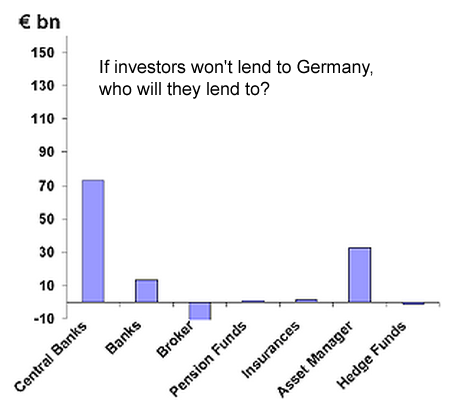
Figure 1: Central banks are lender of last resort, here they are lender to Germany. What can that mean? (Alea’s blog)
If the EU political management represents value, the EU is destitute.
American Airlines just entered Chapter 11: it is the latest in the deadbeats’ club which now includes downgraded giant banks.
Central banks coordinated a relief party for the European Union (Bloomberg):
The central banks of the U.S., the euro region, Canada, the U.K., Japan and Switzerland agreed to cut the cost of providing dollar funding via swap arrangements, the Federal Reserve said, and agreed to make other currencies available as needed. China said earlier today it will cut the reserve requirement ratio for banks by 0.5 percentage points from Dec. 5.
Maybe the international banking cabal is trying to do something different other than watch old-time religion crush the European economy. Dollar liquidity is to be transfered from US accounts to the Eurozone. Keep in mind that several hundred billion in US banking system is flight capital from Europe. It needs to go back where it can be put to some use, such as the retirement of debt.
A large component to the current crisis is capital flight out of the EU and nothing else.
This isn’t a permanent fix but given enough time the management might by accident stumble over the conservation solution.
Notice the subtle change in the narrative? Instead of Utopia tomorrow, the promise of a massive money panic occurring tomorrow is postponed.
People here paying attention are not surprised. The airlines are microcosms of the greater world: held hostage to rising fuel costs on one hand, the effects of those costs on their customers on the other. On the dock is the assumption that non-business airline customers will spend money on flights (junk/carz/government services) that do not provide a money return, such as vacation trips to Nowhere. There is not enough business traffic to keep the bloated AMR afloat, it needs ‘leisure travelers’ with excess time to kill. The airline exchanges nothing — time wasted — for something — productive time spent at labor.
The is part of denial across the platform. The establishment has a narrative that it sticks to: that the economic problem is labor costs rather than fuel cost.
Unfortunately for AMR and the rest of the world, the costs associated with wasting customers’ valuable time are too high to keep the company in business. People are questioning their undisputed acceptance of abstractions — ‘leisure’, ‘money’, ‘growth’, ‘prosperity’, ‘freedom’ and ‘progress’ — in exchange for real goods and resources. Empty prosperity undermines itself, what good is it?
What value does a ‘Germany’ present the world besides an attitude and energy waste? Obviously not much because fewer and fewer are either willing or able to lend to them. Conspiracy theories aside, there is a problem when the only supporter of an idea, country, whatever … is a central bank.
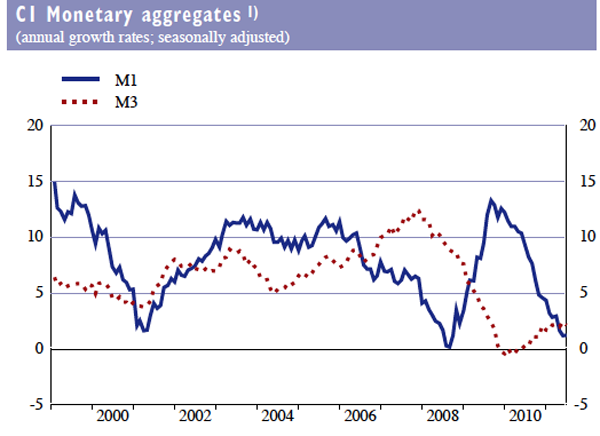
Figure 2: European Union money supply in euros is shrinking. Deleveraging is taking place and liabilities are looking for places to hide. Sez Bloomberg:
Lenders increased overnight deposits at the European Central Bank, placing 256 billion euros ($342 billion) with the Frankfurt-based ECB on Nov. 25, up from 237 billion euros the previous day. That compares with a year-to-date average of 78 billion euros.
€256 billion roughly equals the amounts of cash needed by EU sovereigns to escape the momentary crisis. The capital flight within the Eurozone, from banks to the central bank accelerates the crisis yet the central bank does nothing about it! It is as if the ECB is out to destroy the euro single-handed.
What are the central bankers aware of? It is hard to imagine the ECB is unaware of deflation underway in Europe yet the bank is busy draining cash from economy (WSJ):
The ECB only drained EUR194.199 billion in its weekly operation, below the target of EUR203.5 billion. The target amount equals the total volume of purchases under the ECB’s program for buying euro-zone government bonds on the secondary market.
The EU establishment frets about inflation in a deflationary environment. The public conjures the ghosts of the Joseph Wirth and the post-war Weimar Republic without understanding that inflation in Europe was widespread during the early 1920s and not confined to Germany.
After the end of the First World War, the absence of wartime production left little in Europe for money to buy. This is certainly not the case now where there is a surplus of goods from all sources … except petroleum. Currency value flows away from assets toward the Middle Eastern oil producers. The establishment is willfully blind to this currency drain which is added to the drains represented by deleveraging along with foolish actions of the central bank.
The deflation of the 1930s after the US stock market crash and the failure of Rothchilds’ Credit Anstalt in Vienna in 1931 was also widespread among the remaining European countries. Right now the Eurozone is gripped with deflation including Germany. There is zero danger of inflation inside the euro zone, however countries falling out of it will find inflation almost impossible to avoid. As with countries at the end of the first war, countries’ goods and services output post-euro will be meager yet large amounts of new currencies will be made available. This will be the only way for governments to finance themselves as they won’t be able to borrow.
What is needed is liquidity now to escape the certainty of too much liquidity, later. If nothing else, the central banks must keep the rate of currency expansion equal to the rate of redemptions, which they are not doing.
A reasonable question is how much in the way of liabilities are at risk by ongoing deleveraging? The danger is that the amount of bad or non-performing assets on European banks’ balance sheets is greater than the sum of equity and bondholders liability. Right now, the bailouts by governments have been directed toward bondholders while asset quality deteriorates. Is there any support for depositors?
The panicky run out of euro bank deposits indicates there is none and that the asset quality for EU banks is very poor, that deflation already has a death grip on the EU economy.
Prepare for riots in euro collapse, Foreign Office warns
James Kirkup (Telegraph)
British embassies in the Eurozone have been told to draw up plans to help British expats through the collapse of the single currency, amid new fears for Italy and Spain.
As the Italian government struggled to borrow and Spain considered seeking an international bail-out, British ministers privately warned that the break-up of the euro, once almost unthinkable, is now increasingly plausible.
Diplomats are preparing to help Britons abroad through a banking collapse and even riots arising from the debt crisis.
The Treasury confirmed earlier this month that contingency planning for a collapse is now under way.
A senior minister has now revealed the extent of the Government’s concern, saying that Britain is now planning on the basis that a euro collapse is now just a matter of time.
“It’s in our interests that they keep playing for time because that gives us more time to prepare,” the minister told the Daily Telegraph.
Recent Foreign and Commonwealth Office instructions to embassies and consulates request contingency planning for extreme scenarios including rioting and social unrest.
Where the value is in the EU, that the Union is abandoned by its own central bank?
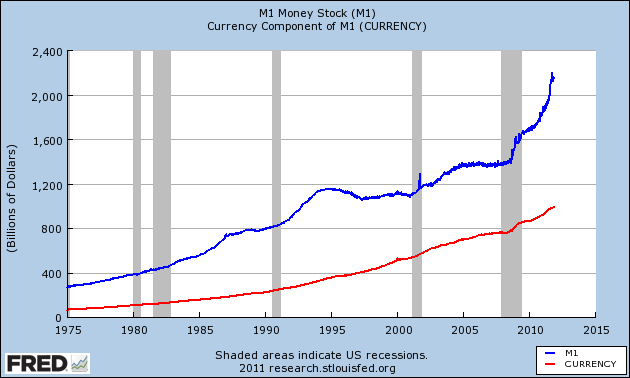
Figure 3: say what you will about Bernanke and Quantitative Easing, there is rising liquidity in the US economy, unfortunately a lot of this is liquidity fleeing the EU.
As MF Global has demonstrated, it is possible for currency in guaranteed currency accounts to simply vanish into the pockets of thieves. One element or another on a balance sheet may be at risk, another element may not be. If the balance sheet itself is destroyed, all elements are at risk.
The balance sheet of any entity is a element on the balance sheet of a larger entity: it is the largest entities with the most opaque balance sheets that are the most vulnerable (and were just downgraded).
BEIJING (MNI) – Expectations that the Chinese government may ease policy at a more aggressive pace have risen in the wake of the latest business surveys indicating a sharp deceleration in industrial activity.A massive injection of funds thanks to budget spending will help support liquidity conditions as the end of year approaches, though some analysts believe the monetary authorities could introduce more active measures to mitigate a pronounced economic slowdown.
Print, Baby print! China may see the same results as in the US:
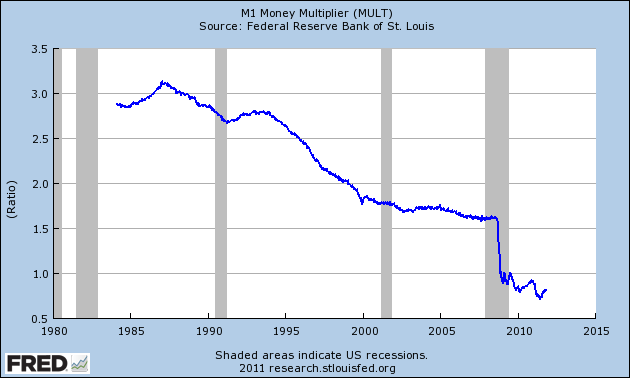
Figure 4: The amount of leverage in an economy does not necessarily conform to a central bank’s innermost desires. Neither the Fed nor the People’s Bank of China can force people to borrow or to buy although the Chinese as mad gamblers are more willing than Americans to risk everything for that chance at (empty) instant wealth.
The Chinese are looking for the EU market to shrink. China will substitute government money for the vanishing European variety. China is smarter than the Europeans, it will borrow to ‘keep up appearances’ as well as avoid, “extreme scenarios including rioting and social unrest”.
Feel sorry for the Chinese, much of their ‘wealth’ is in the form of a massive surplus of US dollars and euros …
There is a cool € trillion reserves in China finance establishment. This position is too massive to liquidate without China taking a huge hit. What happens to China should the euro vanish into thin air? Nobody wants to know!
There are sleepless nights and hand wringing at the People’s Bank of China. Not only are they over-leveraged by a massive amount but their entire balance sheet is riddled with potential potholes.
The euro is hard currency: its replacement(s) will be sharply devalued if only to give policy makers some maneuvering room. Germany is likely to devalue if only to protect some fragment of its export trade with the ‘Brand X’ countries, even as the littoral states devalue to utter worthlessness. How will the ‘Currency Chaos’ effect China?
China’s European market is closing, can Saudi Arabia’s be far behind?
– The world demands more energy resources than it can afford to pay for: this is not peak oil rather post-peak oil;
– The world’s industrial regime is unproductive and cannot support itself without the debt subsidy: ironically, this same subsidy results in less affordable energy resources;
– The debt-money system that has exhausted both borrowing and service capacity: unfortunately this is the monetary regime for the entire world and is intolerant of other regimes;
– The costs that were put off into the future by way of debt thirty years ago are coming due: the future is now;
– The externalities also ignored, denied or put off into the future are accruing in the form of expensive disasters.
This is on one side of the cosmic balance sheet, on the other side is all Show Biz: management strategy is treading water and denial.
Peak oil analysis tends to focus on comparative rates of extraction and consumption. Peak oil occurs is when extraction rates cannot keep up with some other arbitrary rate such as the projected rate of consumption. Extraction and consumption are for all practical purposes identical. Every barrel of oil out of the ground eventually finds a consumer. At the same time, consumption can never exceed supply. Very small amounts of oil is held for long terms in storage: crude oil is not fine wine, it does not improve with age.
Keep in mind, peak oil only exists in the context of automobile waste. Get rid of automobiles and there is no peak oil problem! There is a thousand-year supply of petroleum at current rates of consumption … for lubricants.
Demand which includes an increasing cohort of unsatisfied customers who are ‘priced out’ of the current market. Demand is invisible because it cannot be detected until a customer takes delivery. At what price levels are various customers excluded?
This is important because an easy assumption can be made that demand and consumption are the same thing, that demand is equal to consumption. Demand is the willingness to buy fuel if it is affordable. The demand for fuel depends on the availability of fuel use infrastructure including access to credit. Infrastructure includes highways and vehicles. There are no shortages of hardware but credit is restricted, there is an effective infrastructure shortage due to the shrinkage of credit.
Greeks and Portuguese along with Americans are unemployed, the Egyptians riot: the price where customers are excluded is likely to be a lot lower than the current market price. If these folks had access to credit or (credit derived) cash flow, they would consume petroleum. Without credit they can’t. Contraction of credit, worldwide rations petroleum access. This contraction is reflected in the slow decline in crude price.
Even as the crude price declines it is still historically expensive, consumers are excluded from this market which means the ability to expand credit is also declining.
Fuel price and demand are considered to be ‘sticky’ and in the US, fuel consumption has tended to be consistent since mid-2000s. It should be clear that the market excludes large numbers who have no access to credit or liquid cash. What is taking place is the world demand is shrinking faster due to deleveraging than the rate of depletion.
The outcome of this dynamic is likely to be high-cost drillers left to twist in the wind as the EU market unravels. Look for bankruptcies among some of the ‘minors’ and consolidation.
Demand destruction is a little more than obvious. That Europe is needful of, “contingency planning for extreme scenarios including rioting and social unrest,” with ongoing bankruptcies and bank runs, the collapse of the EU economy and knock-on effects to be felt in China and the US speaks for itself.