Black Swan Dive …


Potential Black Swan events are myriad – ranging
from an attack on Iran to an overthrow of
the Saudi government to increased belligerence
from the new regime in Pyongyang, multiple
sovereign downgrades or an oil shock.

Coordinated recessions in the US and the Eurozone
can’t be ruled out and nor can a collapse
of the dollar, civil unrest in Russia or more geological
events such as those seen in Fukushima
last March…. in short, the list is long …

Grant Williams

100 years ago today, one of history’s most (in)famous swans took flight: on April 10, 1912 the RMS Titanic departed White Star Line’s Southampton dock, toward Cherbourg then Queenstown, Ireland. A mere five days later the ship joined tens of thousands of other wrecks strewn across the bottom of the world’s oceans.

 
The gap between what an enterprise ‘earns’ (zero) and what it must pay for inputs becomes unbridgeable. That is, the cost of credit needed to make these enterprises ‘profitable’ is too high. This is why the world’s industrial economies are collapsing with nothing at all to be done to stop them.
 

Nobody could have seen it coming. The Titanic was unsinkable. It was commanded by the line’s most experienced Captain. The crossing between Ireland and New York was routine. There was no expectation of bad weather. The only issue was a coal-miners’ strike in England that did not allow the Titanic to take on as many passengers as she was designed to carry.
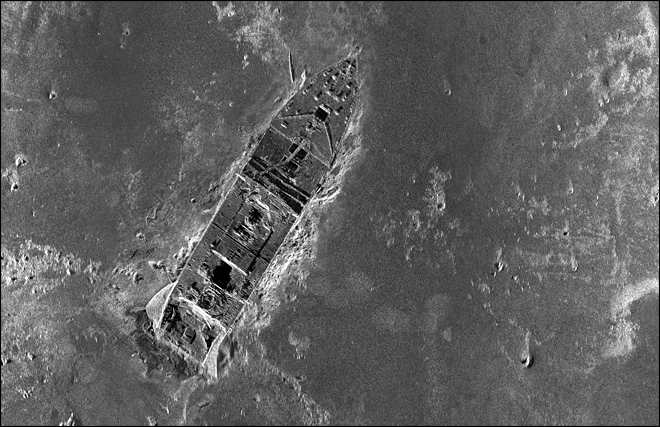


There were problems, of course, there always are. One thing leads to another, there is the cascading series of small failures that — by themselves — would not cause the swan to take a nose-dive, taken together were fatal. The entire Titanic enterprise was constructed upon a foundation of false- or not-quite-true assumptions. Captain Smith did not order the ship to slow as it approached the ice-field. Smith believed his ship to be unsinkable and assumed that any encounter between Titanic and ice would be of no consequence. The ship’s duty officer gave the incorrect order to reverse engines as the ship approached the iceberg. This rendered the ship unresponsive to the helm. He had only been on the ship for a few days and could not know how the ship would respond to orders from the bridge. He assumed the Titanic would maneuver the same as other, similar White Star ships.

The flight officer of Air France flight 447 performed an improper maneuver to correct the slight roll his aircraft after airspeed indicators caused the flight-control computer to switch itself off. The officer over-reacted to the changing attitude of the aircraft by inadvertently pulling the nose of the aircraft up. The outcome of his error — the consequence of icing pitot tubes — was a stall at high-altitude and the uncontrollable descent of the airplane.

The operators of the Three Mile Island Number Two nuclear power station did not realize that the pilot-operated relief valve PORV indicator was giving irrelevant information: that the primary circuit relieve valve solenoid was not energized. This was correct but it didn’t matter, the valve itself was stuck open. A gauge that indicated the temperature downstream of the valve was not visible and the operators were not trained to look for it. By the time the error was realized — by a new shift of control room operators hours later — most of the cooling water in the reactor pressure vessel had been blown through the open valve onto the floor of the reactor containment by steam pressure. The outcome was the release of radiation into the environment and the loss of a multi-billion dollar reactor.
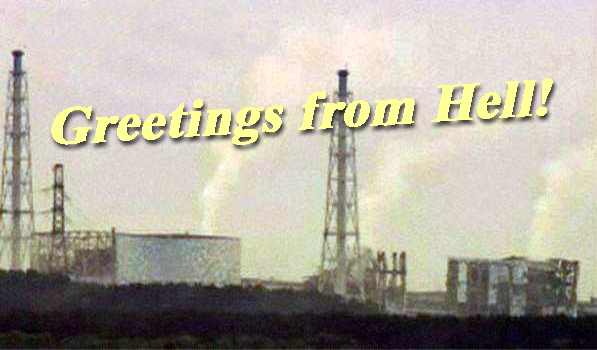


– An incestuous financial and regulatory relationship between the reactor operator Tepco and the Japanese government,

– A fundamentally unsafe reactor design,

– Cheaply built reactors too near the sea level so as to save relatively small amounts of money,

– Crews made up largely of poorly trained, poorly paid ‘contract’ workers often press-ganged into reactor service by Japanese Yakuza gangsters,

– No operating manual on site, no rigorous emergency training for critical staff,

– Inadequate safety equipment: missing or non-existent dosimeters, hazmat suits, respirators, even flashlights at site,

– Insufficient battery backup for emergency cooling systems,

– staff who ‘forgot’ spent fuel pool in reactor building number four, who ‘forgot’ 10,000+ tons of lightly radioactive water in waste-handling building that could have been used to cool the reactors rather than seawater,

– Unclear chain of command and confusion over roles immediately after the earthquake,

– Inoperable reactor vents which resulted in no cooling for reactor cores for extended periods (and probably resulted in steam pressure pushing water out of the cores). The result of these little failures — add a massive earthquake and tsunami — is the ongoing calamity at Fukushima.

Finance failure is little different from others: there is a chain of false assumptions that, by themselves are insignificant, but together lead to disaster. One assumption is that credit and business have a tendency toward expansion. This is silly because thermodynamics insists otherwise. Our strategy to overcome natural physical laws in 2012 is for central banks to recycle credit and pray.

The central banks are the last line of defense for finance’s Titanic. Water leaks in faster so the bankers can bail. The strategy is to keep bailing, to keep lending more and more credit, which is what the ship does not need. Every bucket bailed by the bankers winds up somewhere else inside the ship.

Put a dirty car through the car wash what comes out the business end isn’t a new car, it’s the same old jalopy with the dirt scrubbed off. Meanwhile, every trip through the wash adds the cost of a new car to the bill that must be paid sometime in the future. The harmless assumption is that the washing process will end soon and that the bill will be paid by magic as it has always been paid in the past. That there will be a general increase in the amount of available credit on private debt markets.

A tiny problem is that industrial enterprise does not pay for itself. Except for taxi drivers and deliverymen, driving a car and all the trillions invested in the ‘experience’ around the world does not produce a return. It is pure waste for its own sake that must be propped up with bottomless debt- and energy subsidies. This is the reason for the tens- of trillions of dollars worth of debt taken on in the first place. If industry could pay for itself it would have! There would be no debt because returns earned by industry would have retired it!

The outcome of subsidized waste over the term of decades is repricing of inputs due to decreasing rate of supply relative to the scalding increase in demand. The gap between what an enterprise ‘earns’ (zero) and what it must pay for inputs becomes unbridgeable. That is, the cost of credit needed to make these enterprises ‘profitable’ is too high. This is why the world’s industrial economies are collapsing with nothing at all to be done to stop them.



Central banks provide credit against collateral. Their efforts fail because of the waste-based economic system that falsely labels non-remunerative activities as ‘production’.

Since industrial enterprises cannot pay their own way there is no relevance to central banks’ strategy. Because industry cannot earn, all industrial collateral is worthless.

Central bankers swap impaired assets for ‘new’ assets, the swapped assets are buried on the central banks’ balance sheets. The impairment has been temporarily shifted from one account to another, not eliminated. The expansion of the central bankers’ balance sheets accompanies the shrinkage of private sheets elsewhere. Meanwhile, more finance assets become impaired because the central bank swaps do not represent either new business or new credit, only buckets of liquidity sloshed from one part of the Titanic to another.

A problem is the slowdown in the expansion of private credit, much of which is unsecured. What is called a ‘boom’ is an expansion of un-collateralized or under-collateralized credit. This includes credit cards, student loans, HELOCs and poorly/fraudulently underwritten mortgage/business loans as well as loans within (shadow) banking secured against phantom/re-hypothecated collateral. There is no business activity that provides a return except for Hyman Minsky’s Ponzi finance schemes. Loans must be retired with new loans. Meanwhile, collateral worth shrinks across the board.

Central banks are collateral constrained, that is the nature of central banking. A bank making unsecured loans cannot be the central bank. Otherwise, collateral would be of indeterminable worth: all banking would eventually cease because there would be no unambiguously worthwhile collateral or ‘risk-free assets’.

The purpose of the central bank is to defend the worth of collateral. It takes onto its own balance sheet collateral that the market refuses. By doing so it insures there is always a bid for it in the marketplace. This is a form of institutionalized moral hazard: because the central bank takes on collateral at par the other banks are given the incentive to do the same. Banks become secure enough in the quality of the collateral offered … to lend against it, at least that is the desire.

There are two basic money systems in this world: the debt money system and fiat money. The term ‘money’ includes both currency and credit. Both systems are binary: the debt system binary is ‘asset = liability’, the fiat binary is ‘issue = tax’.

In the debt-money system the central banks don’t ‘print money’: currency increases as government securities are exchanged for at-par loans from the bank. The loan from the bank becomes currency in the hands of the government. In a fiat money system the government issues currency without offering security or borrowing. Because the government is the issuer, security is presumed: consider Abraham Lincoln and the ‘Greenbackers’. Unfortunately, governments choose not to issue fiat currencies. Otherwise the massive overhang of dead-money debt could be swiftly reduced, there would be no generalized increase in the money supply (inflation) as applying currency to existing debt would extinguish both.

Dead-money liabilities that exist on ledgers are phantoms: taken on as collateral they do not exist in any meaningful form. Companies borrow trillions to buy hydrocarbons. Where are these hydrocarbons so that they might be repossessed by the lenders? In the atmosphere in the form of CO2 and nitrous oxides. Let the bankers repossess these gases. More accurate liability is the damage CO2 does to the atmosphere and the life support system, let the bankers possess these liabilities as well.

Any banker stupid enough to make pointless and destructive loans is well deserving of ruin and much worse.

The bankers would see this as a form of repudiation as it indeed would be. Issued currency would be no different from the loans themselves, created with a push of a button on a keyboard: printed money for printed loans! It is the force of the lenders’ habitual oppression combined with reflexive cowardice on the part of governments that sanctifies the bankers and their ‘money’ over everything else.

Here is more from Modern Monetary Theory and Philip Pilkington:


MMTers make the claim – following in the footsteps of Abba Lerner – that the government budget should not be subject to any sort of arbitrary balancing constraint. Instead Lerner and the MMTers advocate that the government budget balance should be conceived of strictly from the point-of-view of real economic variables. Thus, if there is unemployment the budget should be unbalanced, while if there is high inflation due to output capacity being outpaced by demand the budget should be moved closer to balance or even, in certain cases, into surplus. Lerner referred to this approach as ‘functional finance’.

The reason that both Lerner and the MMTers feel confident in making this case is because they hold that a government that issues its own currency and allows their exchange rate to float is not subject to any budgetary constraints. They can essentially issue new money – together with government bonds, if they so wish – until they begin to see inflation. Inflation, then, is the only real constraint to a government that issues its own currency and maintains a floating exchange rate.


If the government issues currency, why would it issue new bonds? To provide a risk-free asset that can ‘finance’ activities (healthcare and pensions) that would be otherwise costly to fund directly. The economy would escape the ZIRP trap: the central bank would have no need to defend ultra-low interest rates as the demand for near-money would keep excess currency from entering the economy.


However, if a developing country tries to spend up to the point of full employment while maintaining a floating exchange rate they are, as stated above, likely to see devaluation and inflation take place as the weakened currency chases more and more imported goods that the country’s own domestic industry cannot produce.


Agreed …


As incomes rise through government spending programs (and potential rises in real wages) people will be more inclined to seek out goods and services that were previously thought of as only available to a small stratum of the population. Devaluation and inflation are then almost inevitable.


Subsidizing waste as resources shrink is bankruptcy in a can. Analysts are stuck with the assumption of credit-stifled demand for consumer goods such as cars and tract houses. The problem is insufficient supply of the inputs needed to run that demand.

When the market-driven price for energy inputs decline it is because demand has been bankrupted somewhere within the system. In the ‘good old days’ of the early oughts, the demand was local, now the destroyed demand is entire countries, swept away in the matter of weeks.

The high-priced crude strands economies and trillions of (borrowed) ‘investments’ that were made assuming $20 crude in perpetuity. The higher the crude price is over $20, the longer this price holds, the more destructive the outcome is.

At the same time, a price low enough to allow increased demand on the waste side is too low to bring new oil to the marketplace.


But think about this for a moment; if we adhere to a purely functional view of finance then we have far more options available than might appear at first glance. We can actually use government fiscal policy to guide domestic investment decisions and ensure that the goods and services people desire as their incomes rise are produced at home rather than abroad.


There is but a slim chance to use finance to move away from consumption/waste and to restructure. The race is on between ourselves and the efficiency of our machines now set on ‘swan dive’.

43 thoughts on “Black Swan Dive …

  1. The Dork of Cork

    “I spent a lot of time in Japan & the one thing I learned about Japan is any statement you can make about japan which is true has a opposite statement which is equally true”
    Milton Friedman was right in this matter but he then is impressed with the private ownership of natural utilties although he mentions the road & rail system and not the power system but many of the economical dynamics are Identical.

    Japan is now suffering because of these relationships that have no clear chain of command.
    Starts 5.30

    http://www.youtube.com/watch?v=oJNxg3ZhXf8

    Oh its clear Iceland is a small country……spot the other………

  2. dolph

    Part of the problem, Steve, is that we’re at peak. Consider what that means. Being at peak means being on top…on top of the world, looking down towards everything and everyone…and up towards the infinite sky, almost touchable.

    When you’re at peak, you don’t care about all that stuff behind you that you had to climb, and you don’t care about all that stuff in front of you that you have to descend. For a brief magical moment, you can be almost thoughtless…with not a worry at all.

    This explains all of our current difficulties. The experiences of the past are “back there.” Even in our bliss we have a vague recollection of the past. Of wars. Of gold. Of plague. Of starvation, and misery. And we don’t want any part of that.

    But we don’t want any part of the future, either, that long descent…sustainability, no growth, living within your means, paying as you go. We want absolutely no part of it, and won’t contemplate it, because that’s “coming back down to Earth.”

    And the human race is collectively high right now.

    The result seems inevitable…we’ll tumble down the mountain, clutching whatever we can to arrest the fall.

  3. The Dork of Cork

    Cannot the banks use Gold on their double entry books using their credit mechanisms ? rather then goverment fiat – this will then fill the waste void of Industrial activities.

    This must explain the apperent tension between the US Treasury / NYFR $ system and the BIS gold preference that FOFOA always talks about.
    With the Washington FED the conduit.
    The absurd zero fiscal debt proposal that the euroclub proposed can only work when Gold is 10,000+ as the banking system needs a token of hypotetical value – be it goverment debt or Gold before it can lend.
    As mortgage assets depreciate while Gold remains or $s can be conjured up with minimum cost.

    There can only be one in my view , the $ or the shiney stuff.

    1. steve from virginia Post author

      the banking system needs a token of hypothetical value – be it government debt or Gold before it can lend.

      … a risk-free asset, in other words. This is indeed the Euro-problem, the absence of a true, risk-free asset. Not even the German debt is worth anything over the longer term … Even without the energy undertones, the EU economies are poorly structured and subject to speculative attacks (as are underway right now).

      Why not attack? The incentives to do so are greater than to not do so, it’s free ‘money’! There is no return at all to simply holding EU debt to maturity, this is something Gail Tverberg sez over and over: who will lend for 30 years post-peak?

      Would a ‘post-modern’ government produce gold fiat currency in place of fiat paper currency? Right now, giving the example of Turkey and Vietnam, the answer is no … and for all the BAU reasons. At the same time, if the government was to produce ANY circulating fiat it would tend to rebalance the debt markets because free money would flow away from the speculators: they cannot refuse to lend b/c the government will step in and make a bid.

      Sometimes I think this is what FOFOA is driving at, but other times I’m not sure. He is trying to square the circle of desired increased gold prices on one hand against the requirement of any hard currency that there is a fixed relationship between the currency and ‘some good’ that it buys, that is, the government sets the price of ‘some good’ and defends that price.

      For instance, we now have a close price relationship/not-quite-peg between dollars and petroleum. (There was an actual peg by way of Texas Railroad Commission). As with all pegs, the tendency is for it to be in disequilibrium (Minsky). Minsky did not specifically discuss exchange rates (including money- or interest rates) outside of the credit markets but his ‘accelerated disequilibrium principle’ applies to exchange rates as well.

      The managers who require a fixed relationship between the good and the currency otherwise there is no peg and some other good becomes the ‘risk-free asset’. Within the relationship between crude/dollar: the price level where petroleum becomes the risk-free asset is much lower than what the petroleum supply/demand relationship would indicate. Market forces push prices higher (causing debt instability) and the point where petro is the R-F asset is the point where crude is not on the market because lifting costs are higher than price. This is big reason why industrial markets are as conflicted as they are now.

      Industry needs high crude prices, to pay for all that fracking. At the same time it needs low price/high dollar worth.

      As long as the world uses oil as primary component of economic activity, it will sweep aside the use of gold as ‘money’. I’m sure there is a three-way gold-crude-cash arb out there, but I have to do more investigating/thinking. Filling in the blanks requires a lot more explanation, but your observation is apt.

      The tension between the high-price/low price dynamics results in confusion, which is taking place now because our current ‘hard’ petro-money is volatile for a whole host of reasons unconnected to the efforts of the managers to stuff the crude price into some kind of corner. Problem #1 is the managers do not grasp the implications of low crude prices, they only see the rewards that fall to pandering.

      The bottom line in all cases is political: the surviving system will offer a longer-term horizon acting in the interests of the entire ‘country’ rather than those of a few well-connected millionaires.

      1. The Dork of Cork

        Yes , the man has become consumed by the wealth potential of the precious………I remember some of his earlier writings , “Greece is the word” comes to mind.

        He seemed to have no idea what was really going on in the Euro periphery at the time.
        He is typical of many Austrians………..fiscal debt orientated where fiscal debt is bad and the measure of a country while bank credit is good…..
        Spain & Irelands journey of credit waste counters that argument
        He later began to talk about how the Euro was created as a currency that would destroy Europe but bring in a Gold Nirvana.
        He could be right about the first part.

  4. rcg1950

    “When values have been institutionalized in planned and
    engineered processes, members of modern society believe
    that the good life consists in having institutions which
    define the values that both they and their society believe
    they need. Institutional value can be defined as the level of
    output of an institution. The corresponding value of man is
    measured by his ability to consume and degrade these
    institutional outputs, and thus create a new-even higher
    demand.

    The value of institutionalized man depends on his
    capacity as an incinerator. To use an image–he has become
    the idol of his handiworks. Man now defines himself as the
    furnace which burns up the values produced by his tools.
    And there is no limit to his capacity. His is the act of
    Prometheus carried to an extreme.”

    Ivan Illich – Deschooling Society, 1970 (yes, 42 years ago!)
    http://www.davidtinapple.com/illich/1970_deschooling.html

      1. steve from virginia Post author

        Ugo Bardi has an interesting bit about the original ‘Limits to Growth’ from 1972. http://cassandralegacy.blogspot.com/2012/04/return-of-limits-to-growth.html

        Here’s more critique:

        Veblen is famous in the history of economic thought for combining a Darwinian evolutionary perspective with his new institutionalist approach to economic analysis. He combined sociology with economics in his masterpiece, The Theory of the Leisure Class (1899), arguing there was a basic distinction between the productiveness of “industry,” run by engineers, which manufactures goods, and the parasitism of “business,” which exists only to make profits for a leisure class. The chief activity of the leisure class was “conspicuous consumption”, and their economic contribution is “waste,” activity that contributes nothing to productivity. The American economy was thereby made inefficient and corrupt by the businessmen, though Veblen never made that claim explicit. He believed that technological advances were the driving force behind cultural change, but, unlike many contemporaries, refused to connect change with progress.

  5. Robert

    Steve,

    You keep pointing out that the Industrial, Waste-based economy cannot pay for itself. For some of us, your definition isn’t entirely clear. Private cars have no real return in your eyes, but taxis and delivery trucks do. OK. What about products of an industrial economy that don’t involve any (or much) fuel consumption yet provide real benefits. How about computers (the Internet where we are reading your site)? How about medical diagnostic machines (MRI scans for a brain tumor)? How about a cell phone that lets a farmer talk to someone in town to determine if there is demand before he transports his crops to market? Its very hard for me to see things like this as lacking a real return even in the context of peak oil.

    1. steve from virginia Post author

      There are two ways to look at this:

      – one is as a ‘last mile’ problem,

      – another is ‘credit cost’ problem.

      Last mile indicates that the last users of many goods do not show a return on their own personal use of modern goods because a return isn’t allowed. It’s hard to earn money with a jet ski or a TV. Washing machine: I guess you could open a laundromat. The returns belong to providers upstream of the end user (providers’ returns are equal to their costs). The end user has to pick up some outside earnings in addition to using the good. His creditworthiness subsidizes his use of the good not the use of good subsidizing something else (like growing food).

      What is taking place as part of the onrushing credit unraveling is that discretionary income/outside earnings are shrinking fast, down to a more-or-less subsistence level. People on food stamps don’t own cars generally. Since earnings are mostly system credit, as that shrinks the jobs/paychecks will vanish.

      The credit approach asks what goods will be available when there is no credit to subsidize their purchase and use? This is valid because deleveraging is accelerating with accompanying credit stripping process. The answer will not please anyone: almost all industrial endeavors are entirely subsidized by credit. The assumption is that industrial enterprises are ‘productive’ mostly they are Ponzi schemes that produce time-wasting junk, credit-derived fortunes for business owners.

      Credit diminishes => profits diminish => businesses close or shrink => more diminished credit in vicious cycle.

      I expect the Internet will die, it uses a large percent of the country’s electricity output: I’ve read 10%. A new chip factory costs $1.5 billion. Large complex machines such as med scanners, computers and cell phone systems … (shakes head). This is a guess, I may be wrong but the ability to shift funds by way of credit will disappear. This last is indeed peak oil related.

      Cheap oil an cheap credit have been the loss-leaders for all the other items, both are becoming (unaffordably) expensive in real terms: conservation by other means.

    2. dolph

      Nobody can know, right, because we haven’t been there before.

      It’s like when a business becomes bankrupt, or a neighborhood goes down the tubes, or a former star becomes old and drunk…the curtain is then pulled away, revealing the truth, the decline.

      See, again, it goes back to the idea that we haven’t really declined yet. Not since WW2. Collectively, we’ve known good times for a really long time. So what is a tech company goes bust – Apple is right there to replace them! So what if your neighborhood goes to shit – You just move to a newer, better one! So what if you have debt – you just add more debt!

      But that’s what I’m trying to say…there’s no “new or better” from here on out. There’s no future. At least in our modern understanding of the term. It’s all downhill.

      So when does it end? When do we arrive at “sustainability?” When do we know…this technology stays, it works, it’s profitable. This city survives. These people live. This country’s political system stays intact.

      Who fucking knows.

      1. steve from virginia Post author

        None of us are particularly sustainable … what matters is not to fret too much about things that are outside anyone’s control.

        The way I look at things, as long as I can get a beer every now and then, life is good. As long as I can get out of bed in the AM, life is good. As long as the fingers and toes wiggle, life is good.

      2. Winston Smith

        for those of us on the razor’s edge of homelessness, it’s not so simple to suggest that, “what matters is not to fret too much about things that are outside anyone’s control”.

        for those of us socioeconomically exploited by the myths of “growth” and “progress”, those of us raped by the brutal, imperial pyramid-and-Ponzi politics of capitalist religion and market doctrine — these are hopeless, deleterious, dangerous and deadly times.

        i fret.

        i find myself planning for suicide before survival.

        hoping for the courage and wherewithal to find success in the attempt.

        knowing i won’t lay claim to any of the three.

        but for all the studies, polls and talk about how most amerikans feel hopeless about the future, i encounter no such reality.

        only the glazed eyes and vacuous smiles of the consensus trance.

        only the relentless faith in the dream.

        while i live a solitary nightmare.

        i looked for family
        i found only business

        i looked for community
        i found only business

        i looked for love
        i found only business

        i looked for life
        i found only business

        i am part of the permanent amerikan underclass.

        a middle aged male with nothing and no one.

        even those who purport to understand, who claim to care, don’t really want to know about folks like me.

        family and community turn their backs with condescension and contempt.

        modern, industrial, capitalist life is only as valuable as a bank account or a full wallet.

        no money, no life, no dignity, no future.

        no worth.

        no redeeming quality.

        money (as presently conceived, perceived, imposed and enforced) is the ocean in which we drown.

        money is violence by other means.

        the human primate
        is the only life form
        on Earth
        to have created
        a culture
        which forces
        life to “need”
        money to live

        it’s a crime against humanity.

        it’s a crime against nature.

        but, to borrow from the late, great George Carlin, “nobody seems to notice, nobody seems to care”.

        The poor are not those who have been “left behind”; they are the ones who have been robbed.
        – Vandanda Shiva
        http://odewire.com/60038/two-myths-that-keep-the-world-poor.html

        The crux of the problem remains the American Dream: even “progressives” see it as the solution — including, I have the impression, the Wall Street protesters — when it’s actually the problem.
        – Morris Berman
        http://www.alternet.org/world/154453/why_the_american_empire_was_destined_to_collapse/?page=entire

        The Tsolakoglou government has annihilated all traces for my survival, which was based on a very dignified pension that I alone paid for 35 years with no help from the state. And since my advanced age does not allow me a way of dynamically reacting (although if a fellow Greek were to grab a Kalashnikov, I would be right behind him), I see no other solution than this dignified end to my life, so I don’t find myself fishing through garbage cans for my sustenance. I believe that young people with no future, will one day take up arms and hang the traitors of this country at Syntagma square, just like the Italians did to Mussolini in 1945.
        – Dimitris Christoulas
        http://www.zerohedge.com/news/syntagma-square-suicide-note-ends-call-young-greek-people-hang-traitors

  6. jb

    A comment from Steve over at TAE that served as a helpful reminder to me:

    http://theautomaticearth.org/index.php?option=com_kunena&func=view&catid=15&id=2124&Itemid=96#2177

    I spent an hour on the phone yesterday talking to a reporter at the local paper who asked me my thoughts on the future of ‘sustainability.’ We immediately got into a discussion on the economics of peak oil, which she was familiar with and very receptive to. We’ll find out next month what she wrote about.

    Jb

    1. Ross

      I’m finding that just like “green” *barf*, sustainability is being co-opted, sanitized and bastardized as fast as corporately possible.

      Sustainability to one man is a loin cloth and a spear while to another it is a solar powered hot tub.

      1. jb

        Ross,

        I’ve been in the ‘green / sustainability’ line of work for almost 14 years. In the early days, there were few standards and benchmarks for determining energy efficiency, indoor air quality, toxicity, etc. A whole industry was created to support (and profit) from this market.

        Some companies really did change their products and manufacturing processes. For example, a lot of nasty VOC’s have been removed from paint. Others, such as the PVC industry, used ‘green washing’ to disguise their BAU practices. They claim their products are ‘green’ because they are durable and last a long time. In the end, it’s left consumers confused.

        Consumers think that by buying a twist CFL in lieu of an incandescent, they’re doing the right thing. Obviously one is more efficient than the other on the user’s end, but as we all know they are both industrial products.

        Like Paul Kingsnorth, I’m walking away from it all.

        http://www.orionmagazine.org/index.php/audio-video/item/paul_kingsnorth_friends_discuss_confessions_of_a_recovering_environmentalis/

        I’ve come to the conclusion that the best thing we can all do is grow our own food / buy local and cut our personal energy consumption in half. But you know this already.

        Jb

      2. Jb

        Yeah, well I am too. It’s been a big fat waste of time and non-renewable stored sunlight. But the people around me don’t get it. They don’t want to and I can’t blame them. Who wants to be told their lifestyle is a pure fantasy that’s coming to an end?

        And what to do about it? I mean really, what can any of us do? We can re-hypothecate economic theory all day long, but it won’t do one damn bit of good. We can plant our little gardens, but who are we kidding? We all know there isn’t enough social awareness or momentum to make the changes required. Everytime someone says ‘there won’t be any Mad Max scenarios’ I wonder what rainbows and unicorns dreamworld they are living in. Just wait till the ration coupons are issued (if we’re lucky).

      3. The Dork of Cork

        The second girl is a not very logical animal…if she was she would kill herself.
        “Resistance requires material resourses.”

        A dangerous girl me thinks…..the reformation morphed into very nasty wars.
        http://www.youtube.com/watch?v=ryozM8twDUI
        With puritans the most dangerous of animals

        I would be careful of the English idea of nature although I agree with most of what Paul Ks views which appear sophisticated.
        They typically go to Scotland and think it is wild, such as this remote lodge and plot how to take over the world.
        http://www.geograph.org.uk/photo/1653765

        Scotland is a artifical landscape although it is a beautiful one.
        But it is wilder (in terms of biosphere) then what it was 50 years ago , 100 years ago.
        It is under attack from windfarms now … but it was always under attack…. but its still there.

  7. christiangustafson

    Teh French elections 22 Avril, bitchez.

    A lousy showing by Sarkozy will sink the Euro.

      1. steve from virginia Post author

        If you have been following Art Berman he has been pointing out that the profits in the gas biz are gained on Wall Street (borrowing profits). Completed wells are ‘booked’ as reserves b/c initial recovery rates are very high in the beginning. Over time the gas fields have ‘problems’ paying their way as you’ve noticed.

        Wall Street energy economy versus gas/oil field economy. Guess which one gets all the attention?

        As long as Wall Street can keep buckets of money flowing through the energy companies the US will be an ‘Energy Superpower’.

        I almost can’t wait until that pathetic lie is exposed and the cockroaches have to run for cover.

      2. christiangustafson

        Let’s see if I have this right, Steve.

        We have found very large, previously-unrecoverable, amounts of natural gas in the America.

        Petro companies see these resources as a great way to boost their aggregate proven energy “reserves” on paper.

        The technique for extracting this gas is very capital intensive and expensive. Wall Street steps in, promoting speculation in natural gas and financial leverage for these reserves.

        We are unable to export the natural gas as LNG; we simply have no facilities for this.

        NG swamps the domestic market and futures plummet below $2.

        At $2, it’s cheap energy! Let’s use it while we can! Let’s burn it up!

        The initial supply boom tapers off just as the financial framework breaks down. But it was a fun party while it lasted!

  8. enicar333

    While traveling North from Chicago on I-94, take exit 333 (hwy 20), straight to Racine (Hell) – 666.

    IF you can brave the crime, welcome toAmerica’s fastest dying affordable City:

    ” The city of Racine’s average purchase price reached a new foreclosure-fueled low not seen for many years at $51,156. The average a year earlier was $62,573.

    Mount Pleasant’s average purchase price dropped precipitously, from $172,945 in first quarter 2011 to $125,262 this year. That was a one-year drop of 27.6 percent, or more than one-fourth.

    A west-end example was Waterford Township, where the average purchase price declined from $221,005 to $176,148 in one year. That was a decline of 20.3 percent, or one-fifth.”

    Meanwhile to the South, in Kenosha: – “About 350 Kenosha public school teachers will get layoff notices because of the district’s budget problems, but officials don’t expect all of them will lose their jobs.

    The Kenosha Unified School District is trying to close a projected $33 million budget gap for next year, created by both federal and state budget cuts and a previously negotiated increase in staff pay.”

    When do we reach the tipping point?

    1. steve from virginia Post author

      When do we reach the tipping point?

      When housing prices in DC start swan-diving …

      You know there are over 1,200 houses subject to foreclosure in San Francisco right now, most are priced over $500k. All the budgets are busted, it’s insane!

    2. christiangustafson

      Take the train from Chicago to Milwaukee. See the ticky tacky cul-de sac sprawl over some of the world’s finest farmland. I can’t imagine that in-between world is doing so well today.

      Places like Racine, Peoria, the Quad Cities, Dixon, Rockford. Gott im Himmel!

      1. Ross

        Those places are the equivalent of hell. They are economic no-man’s land. I’ve been looking at houses in Kenosha on and off because the Metra station makes the Chicago Loop accessible. I’m looking for something walking distance to the train with a big backyard. I found things for under 50K over 18 months ago. Things are distressed and they are a well-connected spoke of a major urban core.

        Rockford, good god man. It was bad when Wayne was still making his TV show in the basement.

        The ethnic breakdown in Kenosha is a lot more homogenous than in Racine. That and the train are it’s only edge favoring potential stability over Racine, Peoria, Rockford.

        These places are Detroit writ miniature. Any future prosperity relies on a total renaissance.

      2. enicar333

        You are very correct, and I agree with your assessment – it colors my World view.

        Racine cannot be saved – there is a future potential for much greater violence and a major breakdown in law and order is likely. Already, the Police don’t control large parts of it. Businesses are closing, and major streets have large areas that look like ghost towns. Board ups everywhere. Murder is down, but shots fired is daily – it’s not news anymore – it’s daily.

        Kenosha would be a good choice – check out the Condos on the Lakefront, on the old AMC shipping grounds. They are by the train station, safe, nice and close to lots of activities and resturants. Kenosha is considered a (mostly) clean and safe town. Racine… is a garbage dump.

      3. Mr. Roboto

        Hmmm, it just occured to me that maybe I shouldn’t complain so much about the Cudahy/ South Milwaukee area where I live in Milwaukee County. :-0 I guess I just miss Madison, but it just wasn’t spiritually appropriate for me to live there anymore. 🙁

  9. The Dork of Cork

    “I think (John Bull) I am turning Japanese , I think I am turning Japanese , I really think so”
    But not in a 1990s way…………in a 1970s / 1980s ? fashion perhaps – at least in the transport department.
    http://www.rail.co/2012/…/10/union-claims-rail-firms-have-no-idea-how-b
    The power of monetary policey is awesome.
    Shame about their fiscal policey
    = overcrowding

    http://www.youtube.com/watch?v=gEmJ-VWPDM4

    some BBC guy ? “It’s clear my company has no idea about overcrowding on their line. The staff at the stations warn people and suggest alternative trains, the staff on the train regularly ignore the standard “customers” rammed into first class and declassify carriages. The ticket guys overlook tickets reserved for specific trains because the poor sod with the ticket can’t actually get on to the train they’re booked on. Can’t fault them.

    But the upper end of the company have no plans for more trains, they “improve” timetables in ways that make certain trains vastly overcrowded (their last big changes removed two peak trains and made two more useless to most passengers) and they regularly run schemes to encourage even more people on to trains that they should (and blatantly don’t) know are always rammed full.”

  10. The Dork of Cork

    On a positive note .
    Montpellier tram lines 3 & 4 are now operational (April 7) .
    Line 3 is a very long by tram standards ,19.4KM.
    From the railway gazette
    Described as the first circular route on a new tram network in France, Line 4 runs for 8·4 km on sections of lines 1, 2 and 3 from Saint-Denis to Place Albert 1er, serving 17 stops and expected to carry 14 000 passengers a day.
    Rolling stock for the new routes has been supplied by Alstom Transport, with Line 3 operated with a fleet of 19 Citadis cars, each 43 m long. With services running every 7½ min during the peaks, Line 4 has 12 cars each 40 m long.
    The new lines have cost a total of €530m, of which €369·4m has been provided by the Greater Montpellier authority and €82·6m by the French government. The Languedoc-Roussillon region has contributed €50m and the département of Hérault a further €28m.
    April 7 also saw the extension of Line 1
    http://www.youtube.com/watch?v=IOqm-ZO5bhE

  11. Alan

    Hi, Steve! I’m greatly enjoying your blog, after recently discovering it. Thanks.
    I’m a peak oil doomer from way back (would you believe 1999?), now in recovery. I’ve come to realize that, though it is a very big deal, it is less big than I once thought, and also big in different ways than I thought. Long story, which I won’t bore you with — for now.

    A couple of quickies, which I will merely assert, without trying to defend (defense would take hours or days, which I don’t have to devote at this time):

    you write: “the world’s industrial economies are collapsing with nothing at all to be done to stop them.”

    No, I see no evidence of that. I see a lot of things collapsing — notably hyper-financialized “economies” (“economies” not worthy of the name), and ridiculously waste-based and petrol-dependent cultures — but not the world’s industrial system. There’s plenty of fuel to power industrial civilization. Just not the corpulent and diseased West. (Good idea not to confuse the two — a very common error!)

    “I expect the Internet will die, it uses a large percent of the country’s electricity output: I’ve read 10%.”

    A trifle. The internet will not go down, ever, barring perhaps global thermonuclear holocaust (or other black swanny thing: asteroid hits earth, etc.). It is far too useful, and pays for itself many times over. Some ASPECTS of it might go down or become less available or much less affordable, particularly for some people in some countries, e.g. streaming 24/7 high-def porn, or what have you.

    “A new chip factory costs $1.5 billion.”

    Yes, or 5-10 times that, and worth every nickel. Or should I say renminbi? The BRICS have things well in hand, now prepping for a post-West world. They’ll hit some speedbumps, but it won’t last.

    Cheers, and keep up the good work. Your commentary is generally excellent.

    Alan from Gitcheegoomee

    PS:
    http://www.businessweek.com/news/2012-04-02/samsung-to-spend-7-billion-on-mobile-chip-plant-in-china
    Samsung to Spend $7B on China Chip Plant
    By Jun Yang on April 02, 2012

  12. Alan

    Brilliant post (I am mentioning it here, for the benefit of new(er) comers who might have missed out):

    http://www.economic-undertow.com/2010/10/24/culture-change-broken-chains/

    … containing numerous gems; among them:

    “[The] ‘dictatorship of wants’ runs at cross purposes to nature’s parsimonious ‘economy of needs’. These are simple: food and water, clothing, shelter along with delight – love, sex and a stimulating and beautiful environment. I submit the greatest shortage now is not fuel but interesting, remunerative forms of work.”

    and:

    “John Michael Greer’s … salvage society represents a a failure of imagination.”

    Yes, precisely!

    Well, WELL done, thanks.

    I submit that the biggest shortage now is not fuel, but imagination, intelligence, prudence, ethical sense, wit, forbearance, and a host of other characterological and spiritual qualities — qualities that the West has been (seemingly systematically; at least persistently) neglecting and even penalizing.

      1. Alan

        Reverse Engineer says:
        “The Chinese are TOAST.”

        I’m curious: are you saying that the entirety of the Chinese people, and nation, are going to disappear, be liquidated, or die, spontaneously? If not the entirety, then how many, as a proportion? 90%? 95%? Less? More? Or by “toast” do you mean something else, less drastic? Like, say, a reduction of GDP by 30%, or something like that? Or, say, a reduction of life expectancy from the current circa 70 years down to 60, or 50, or whatever. Please be specific as to what you expect for the Chinese.

        Further: WHEN is this going to happen? I mean, approximately. I’m not expecting a precise date, but some reasonable projection — say, “within 3 years”, or “before 2020”, or something like that.

Comments are closed.