Last week mayhem in metals markets and stress elsewhere, let’s look.
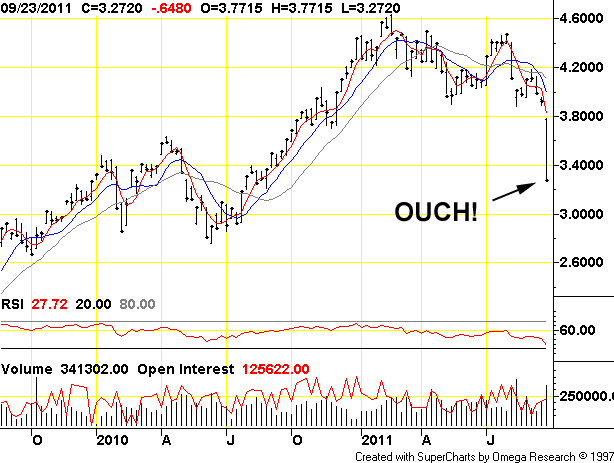
Figure 1: The is the weekly continuous Comex futures chart for high grade copper by TFC Charts. Copper had been trending down since the beginning of the year but was taken out and shot last week. Speculators holding the metal looking for long-term demand were caught out by margin calls, all the talk about ‘growth’ being just that.
This chart identifies a problem in today’s markets: when they turn against the longs there is no time to get out!
Here is silver:
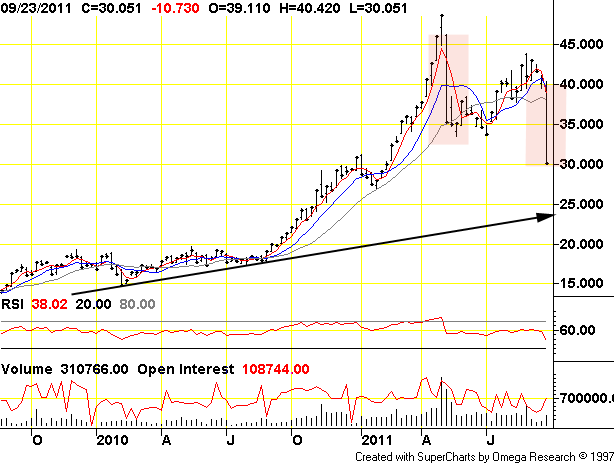
Figure 2: The trend line at the bottom of this weekly chart indicates the ‘bulge’ in prices from panicky QE-driven buying has ceased. What is the market saying here? That there will be no more easy credit from the Fed for the time being.
Note the two large plunges. As silver bulls succeeded in bidding up the price of silver, they vacuumed available silver from the market. This left the exchange itself as the only ‘seller’.
It doesn’t cost the exchange anything to create contracts-for-sale and the offsetting positions are taken by the exchange bank(s). Since the vast majority of long contracts are rolled over (into new contracts) or settled for cash, the bank’s risk is limited because theirs is a ‘paper short’ against the buyer’s ‘paper long’. This state of affairs allows the exchange to carry a much larger short position than what marketplace fundamentals — open interest and net long/net short — might suggest.
When the last buyer is in the market it turns, leaving the exchange bank as the only bidder. The eager longs have given the banks what is effectively a corner: after the turn they stand aside while longs’ offers twist in the wind … then are liquidated to meet margin, which is conveniently set by the exchanges! This is easy money for the banks: ‘stealing candy from baby’ easy.
None of this has nothing to do with fundamentals, where demand for physical metals is very close to (shrinking) supply. As with crude oil, higher prices in precious metal markets do not translate into greater mine output.
There are a number of stories the metals’ markets are telling, the one that jumps out is the growing shadow over China’s ‘Fake Ugly’ economy. Keep in mind while looking at the following chart that China since Lehman blew up in 2008 has been the subject of the ‘Greatest Keynesian Leap Forward’ in history: government- and central-bank stimulus at 14% (or more) of GDP:
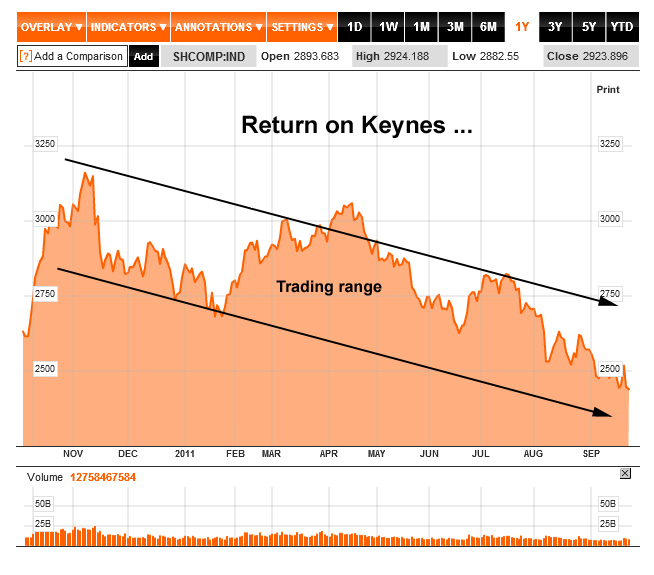
Figure 3: This is the Shanghai Stock Exchange Composite Index (Bloomberg). Starting in 2009. the Chinese establishment ordered open every credit tap that could be laid hands upon. The outcome has been a tsunami of new capital projects that are proving to be not worth very much. As with Japan and its own multi-decade Keynesian experiment, the state cannot command nor bribe ‘investments’ to be profitable.
Instead of growth, there is ‘growthiness’. A large and growing shadow economy is pushing China into hyperinflation as the ‘official’ currency is worth something in the banking/government sectors and something else on the streets. Since China’s yuan aren’t traded freely on international markets and cannot be swapped for crude oil, the Chinese need other currencies — dollars, sterling, euros and yen — in order to obtain fuel. Can it get them? Today, yes: tomorrow? China has hopelessly screwed itself: it is a larger, uglier version of Greece, on the same trajectory with the same (Max Fail) result. China’s is the world’s hollow economy, with nothing in the country that’s really worth anything.
Here is a chart of the hated US dollar (index):
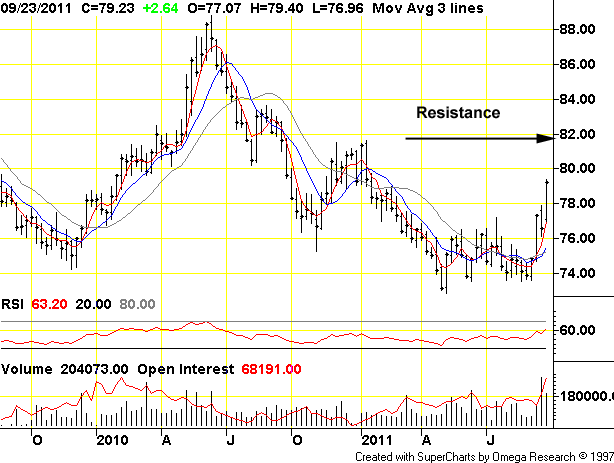
Figure 4: This NYBOT continuous futures contract weighs hated dollars against a basket of other traded currencies. Because the world’s establishment is living in the tail-fin, Buddy Holly past, the investments made with that era in mind cannot earn a return as inputs are repriced to reflect up-to-date supply and demand realities.
What sets the price of dollars is its exchange value for crude oil, not its exchange value for precious metals or other currencies. The hated dollars have ‘crude value’ largely due to their ubiquity. Because they are freely exchangeable around the world for crude-ish products they are ironically becoming harder to find.
As this crude/dollar dynamic takes hold, the world’s economy shrivels to 1933 debt-deflation levels, becoming a quest to gain the hated dollars so as to obtain fuel. As high crude prices stifle production and gains from honest labor, what remains is currency speculation/gambling on all kinds of markets including the ‘black’ variety.
Where dollars are not available, other reserve currencies will be in demand such as euros or Japanese yen. Because small economies have little to offer oil producers, non- reserve currencies will be useless to swap for fuel. The currencies of oil producers themselves will vanish from F/X markets as these will be swept by those seeking crude ‘through the back door’. At some point of maximum stress, producers will demand — and gain — payment in kind or gold. Once gold becomes the price for crude or gold-backed ‘purchase currencies are adopted by ‘crudeucers’, the world will discover it can afford only the minuscule amounts of crude oil that actually provide a real return on use.
The value of precious metals is set by speculators in the COMEX. The value of dollars and crude oil is set by what a billion motorists can afford at the gas pump at any given time. Because motorists set the value of money every day around the world, central bankers may as well go out of business. When motorists go broke, they buy less fuel. Since the the vast majority of motorists earn dollars or whatever by ways unrelated to driving, the burning process is antagonistic to the earning process. This means the empire of energy waste we have built up for our pleasure is supported by a very small amount of actual returns that are highly leveraged.
This isn’t a chart, but it’s important:
About Energy and CapitalToday, energy is at a global crossroads. The International Energy Agency (IEA) estimates a minimum of $20 trillion needs to be invested over the next 25 years to meet surging energy demand and to offset the declining reserves of the world’s major oil fields.
Where is that $20 trillion going to come from? To earn that much requires the low fuel price which allows large returns. The only way to get the highly desirable low price NOW is by way of recession, which leaves few with any returns at all! Any growthiness instantly pushes up fuel prices kicking said growthiness in the face! At the same time, low oil prices keep oil off the market because the producers’ costs are constantly rising. The low-priced oil was exhausted long ago.
Meanwhile, another $20 trillion over twenty-five years is necessary so that oil producers can bribe their citizens to remaining passive while their petroleum birthright is pumped into the tanks of American SUVs and giant pickup trucks. Comes now Blasé America giving the finger to an unknown quantity blithely assuming it can afford to do so far into the future! This isn’t exceptionalism but foolish tempting of fate, tugging on Superman’s cape.
Once the restive citizens wake up to the fact that the status quo removes any chance of them having oil for their own wasteful purposes, that second $20 trillion won’t be nearly enough …
Here are some oil charts:
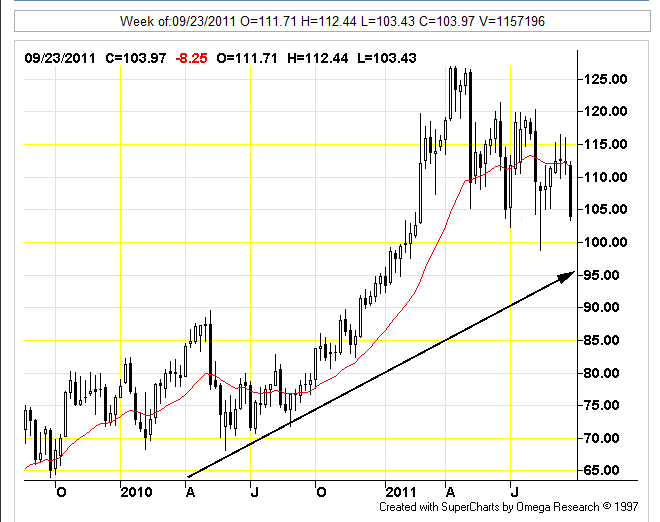
Figure 5: Here is the weekly Brent crude futures chart with the longer-term trend support indicated (from TFC Charts). There isn’t enough purchasing power in today’s economy. Why? High oil prices leave less cash for other purchases, such as wages for customers!
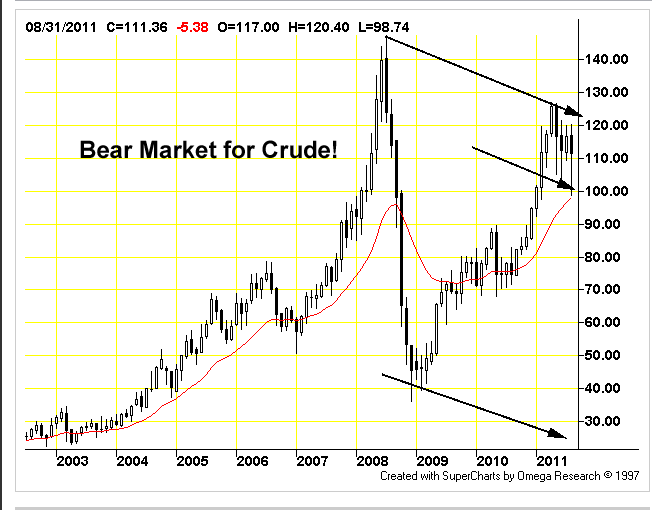
Figure 6: Looking at Brent crude from the longer monthly perspective since the early 2000s: the ability to pay high prices has diminished. We are all in a tremendous mess! Current prices cannot be supported out of cash-flow, the prices themselves are strangling said flow. The goods and services produced with the high-priced energy return little in the way of value. We turn to credit markets which are collapsing under the weight of our excess demands on them. With credit gone, there are few motorists anywhere in the world able to support $120 crude, much less $148 crude, maybe Warren Buffett and friends.
The trillions of dollars the oil enterprise needs translates into a very high price per barrel before it leaves the ground: $100 or more per-barrel. We are living an economy that cannot pay for itself.
Modernity is nothing more than a massive, stupendously destructive wasting machine which we cling to like children. We refuse to imagine anything else. Our infrastructure, institutions and exchange mechanisms — are useful only when fuel is plentiful and prices are ridiculously low. They are obsolete now: almost every idea we have about how the world is supposed to work is wrong.
Tripping along with idea-burnout is inept, compromised leadership. The European management cannot bring themselves to take the simple steps — centralized lending and energy conservation — that would allow the entire continent to reorganize itself on something like its own terms. It instead endlessly promotes more waste. Europe submits to entropy’s pitiless terms, for it does not concern itself with whether the Europeans agree to anything or not. The EU periphery is on the course toward Zimbabwe while the core states are replaying the collapse of Kreditanstalt bank. The first time resulted in the rise of Hitlerism and a shattered Europe. What monstrosity comes this time?
In the US, denial wrestles with stupidity as each member of the establishment seeks to be more buffoonish than the next. All cry for Jesus to arrive down America’s chimney with ‘easy solutions’ that include more and more pointless cruelty directed toward scapegoats. Events reveal no Jesus, rather the demons that have long resided at the center of American ‘Capital’ and its paranoid exceptionalism. This takes place as the price of fuel products relentlessly declines below production costs … stranding the entire waste-based enterprise.
Because producers need high prices to sustain output, flows of crude will drop along with the price. A major economic inflection point is reached when low prices cease to produce green shoots or ‘growthiness’. Without a restructuring away from fuel waste, the trajectory the world is on becomes energy-driven deflation without end.